
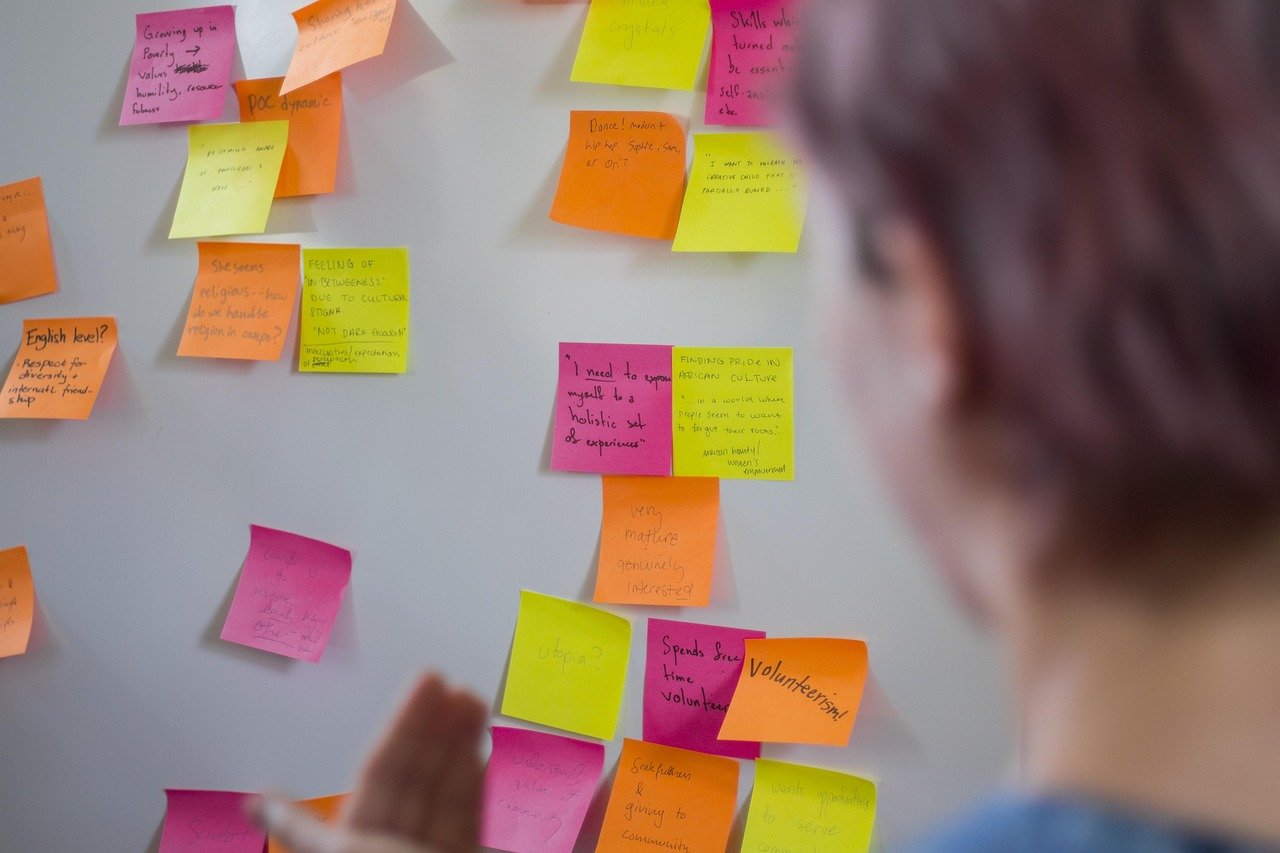
An honest reflection on intelligence, curiosity, too many ideas, and the struggle to stay focused long enough to succeed.
I have been thinking about something about myself lately.
I am curious about many things. I enjoy learning, exploring new ideas, understanding how things work, and spotting opportunities other people might overlook.
I can move from web development to digital marketing, from business strategy to artificial intelligence, and from automation to a completely new idea that suddenly catches my attention.
When I discover something interesting, I want to understand it. When I see an opportunity, I start imagining what I could build with it. My mind connects ideas, sees possibilities, and works out how things could be done.
There is always something new to learn, something new to build, or another direction worth exploring.
On the surface, that sounds like a strength. And perhaps it is.
But there is a problem I have started to recognise. Sometimes, seeing many possibilities makes it hard to commit to one long enough to see real results.
I know I can learn. I know I can develop new skills. I know I can understand complicated ideas and turn them into practical solutions.
But knowing what I can do and building something valuable from what I know are two different things.
And that difference has made me question myself.
The burden of seeing too many possibilities
I rarely see just one opportunity.
When I look at a problem, I can imagine several ways to solve it. When I think about business, I can see different markets, services and openings worth exploring.
As a web developer, I can build websites. As a marketer, I can think about attracting customers. When I explore AI automation, I start to see how businesses could save time, cut repetitive work and run better.
Each direction has potential.
The problem is that potential is not progress.
I can spend time understanding one opportunity, only to find another that looks more promising. Before I have fully developed the first idea, my attention is already moving to the second.
Sometimes I convince myself the new direction is the smarter choice. The market is better. The opportunity is bigger. Maybe this is what I should have been doing all along.
So I start exploring again. And just like that, I am at the beginning of another journey.
I am learning, thinking, planning and preparing. Yet I may not be giving any single direction enough time to produce the results I want.
It is a strange experience, because I don’t feel lazy. My mind is active. I am doing things. I am gaining knowledge.
But activity and progress are not always the same.
When learning becomes a comfortable place to hide
I am beginning to see that learning can become a form of escape.
Learning feels productive. Every new concept gives me a sense of progress. Every new skill makes me feel more capable. And there is excitement in starting something new, because the possibilities are still open.
Execution is different.
Execution means repeating things even when they get boring. It means approaching potential customers, making offers, dealing with rejection, improving my work, and keeping going when the results are disappointing.
It takes patience.
For someone who enjoys discovering new things, repetition can feel restrictive. The mind wants another challenge, another idea, another possibility. But building something meaningful usually means doing the same important things over and over again.
If I want to build a successful web design business, learning another programming language will not automatically bring me clients. Studying another marketing strategy will not bring in revenue unless I apply what I have learned.
At some point, I must stop preparing to succeed and start doing the work success requires.
The question I need to ask myself is not, “What else can I learn?”
It is, “What can I do consistently with what I already know?”
Am I overthinking my way out of progress?
Another possibility is that I spend too much time weighing my options.
When I can see the pros and cons of several directions, deciding becomes hard. I want to choose wisely. I don’t want to waste time on the wrong opportunity.
But constantly searching for the perfect decision has a hidden cost. I can spend so long looking for the best path that I never travel far enough on any path to find out what it could become.
I may never have enough information to know for sure that a business idea will work. Sometimes the only way to find out is to commit to it, test it in the real world, and learn from the results.
Thinking can help me make better decisions, but thinking alone cannot replace experience. There is a point where more analysis stops improving a decision and starts delaying it.
I need to recognise that point.
I also need to accept that choosing one direction does not make every other opportunity disappear. It simply means I am deciding what deserves my attention now.
I can return to other ideas later.
The difference between intelligence and achievement
Understanding something quickly does not guarantee that I will achieve much with it.
Intelligence may help me learn faster, recognise patterns, solve problems and imagine new possibilities. But achievement also needs consistency, patience, judgement, and the ability to keep working towards a goal after the first excitement is gone.
Someone who knows less than I do in several areas may achieve more in one of them, simply because they have spent years applying what they know to one specific problem.
That person may have built stronger relationships with customers, earned a trusted reputation, refined a service, and learned from hundreds of practical experiences.
Meanwhile, I might still be exploring which direction offers the most potential.
That is an uncomfortable thought. It is also a useful one. It reminds me that I don’t need to know more than everyone else to make progress. I need to make better use of what I already know.
I don’t need another idea every week. I may need to give one good idea another six months of serious effort.
I don’t necessarily need more opportunities. I may need to do more with the ones already in front of me.
And I don’t need to prove that I can do many different things.
I need to build something that works.
What I want to change
I don’t want to lose my curiosity. It is part of what draws me to technology, business and solving problems. I don’t want to stop exploring new ideas or learning new skills.
What I want to change is how I direct that curiosity.
Instead of letting every interesting idea become a new project, I want to be more deliberate about what I pursue. I want to choose a main direction and give it the time and attention it deserves.
I want to measure my progress by what I build, what I finish, the problems I solve and the value I create for other people, not just by how much I have learned.
I want to get comfortable with repetition. The work that produces results is not always the work that feels exciting.
And when another interesting opportunity shows up, I want to write it down, look at it later, and go back to the task I have already chosen.
Most of all, I want to stop treating every new possibility as a sign that I should change direction.
Sometimes a new opportunity is worth pursuing. Other times, it is simply a distraction wearing the clothes of opportunity.
Learning to tell the difference may be one of the most important skills I develop.
Perhaps I don’t need to become a different person
As I reflect on all this, I am trying not to turn my curiosity into a weakness in my own mind.
There is nothing wrong with having many interests, or with being able to work across different fields. The problem starts when those abilities are not organised around a clear priority.
Maybe I don’t need to be less curious. I need stronger boundaries around my attention.
I don’t need to stop generating ideas. I need to get better at finishing the important things I start.
And I don’t need to find the perfect opportunity. I need to choose a worthwhile one and stay with it long enough to understand its real potential.
Focus does not have to mean abandoning everything else I could do. It means deciding what matters most right now, and letting that decision guide what I do.
I can still be interested in web development, marketing, business and artificial intelligence. But I don’t have to build a business around every interest at the same time. One direction can be my main priority while the others stay possibilities for the future.
That is a different way of thinking about my abilities.
Instead of asking how many things I can do, I can ask which one deserves my best effort at this stage of my life.
Instead of always searching for a better direction, I can focus on making my chosen direction work.
And instead of measuring my potential by how many things I understand, I can start measuring it by what I actually finish.
My new definition of progress
I am writing this because I suspect other people feel something similar.
Maybe you have several interests. You learn quickly, think deeply and keep seeing opportunities. People may call you intelligent, yet you sometimes wonder why your results don’t match what you believe you can do.
If that sounds familiar, consider this.
Maybe your problem is not a lack of intelligence.
Maybe you have been spreading your intelligence across too many directions, leaving too little time for any one of them to produce the results you want.
Of course, other things can be involved. Financial pressure, limited opportunities, personal responsibilities, fear of failure, or difficulties with attention can all affect progress. Not every struggle comes down to a lack of focus.
But if constantly switching directions is part of your story, it may be worth looking at honestly.
You don’t have to solve your whole life at once.
You can start by choosing one meaningful goal, defining what progress looks like, and committing to the actions that move you towards it.
You can give yourself permission to explore later.
You can let yourself become good at one thing before rushing to the next.
And you can remind yourself that a promising idea is only the beginning. Its real value shows when you put it to work.
I am still figuring this out myself. I don’t have a perfect formula, and I am not writing as someone who has solved every problem described here.
I am writing as someone who recognises a pattern and wants to change it.
I want my knowledge to produce results. I want my ideas to become useful things. I want my curiosity to help me build a life with more freedom, purpose and real achievement.
And I am beginning to understand that this may take less searching and more sustained effort.
Perhaps my next level of growth will not come from discovering something new. Perhaps it will come from finally giving what I already know enough time to work.
That is the thought I want to carry with me.
Not the pressure to do everything.
Not the need to explore every possibility.
Just the willingness to choose, focus and follow through.
Build Systems. Create Wealth. Live Freely.
What about you? Have you ever felt that your curiosity and ability to see many possibilities have made it difficult to commit to one direction? I would love to hear your experience in the comments.